
Introducing AstroBiology
OPENING QUESTIONS: Sketch the requirements for life to exist? (Think back to 9th grade bio!
OBJECTIVE: I will be able to state the conditions necessary to exist for life to survive and thrive on planet Earth during today's class
WORDS FOR TODAY:
- astrobiology
WORK O' THE DAY:
═══════════════════════════
Please take a moment to share your sketch with the other folks in your group. Why did you choose the various features that you included in your sketch?
Any volunteers?
═══════════════════════════
Now let us ponder this: What are the basic conditions that (we think) MUST be present in order for life to survive and thrive?
═══════════════════════════
Now let's take a look at some of these environments here on Earth. Please get up and stroll around the room to the work stations I've set up.
For each of those pictures please write down the name/description of that location.
Please add full sentence responses to each of these prompts at each work station:
Indicate whether *each* of our requirements for life (as we determined at the beginning of class) is present or absent in that location
Suggest a possible temperature for each location and indicate whether that increases, decreases or eliminates the likelihood of life to exist there.
Suggest whether pressure is a factor for the presence of life in that location
Use a five point scale to indicate how likely you believe life is to exist at that location (we will define life to be any form of plant, animal, fungal, bacterial or related life form)
═══════════════════════════
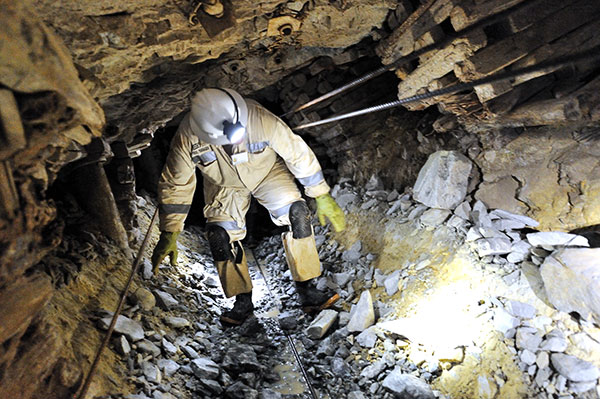
1) The Mponeng Gold Mine approximately 2.5 miles below the Earth's surface in South Africa. The temperature of the rock is approximately 150 degrees Fahrenheit. Pressure is similar to pressure at the surface. There is no sunlight.
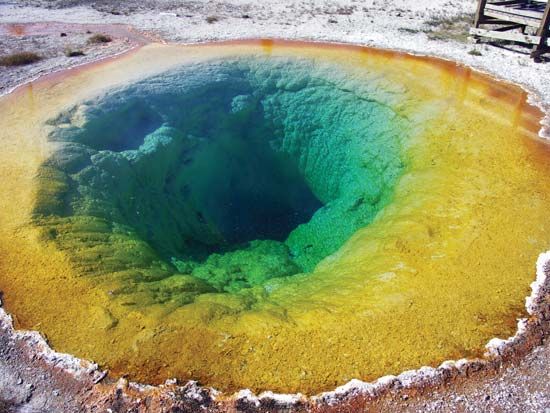
2) A steaming, bubbling, boiling pool of nasty, poisonous chemicals in the Morning Glory Pool in Yellowstone National Park. Temperature is approximately 160 degrees. :
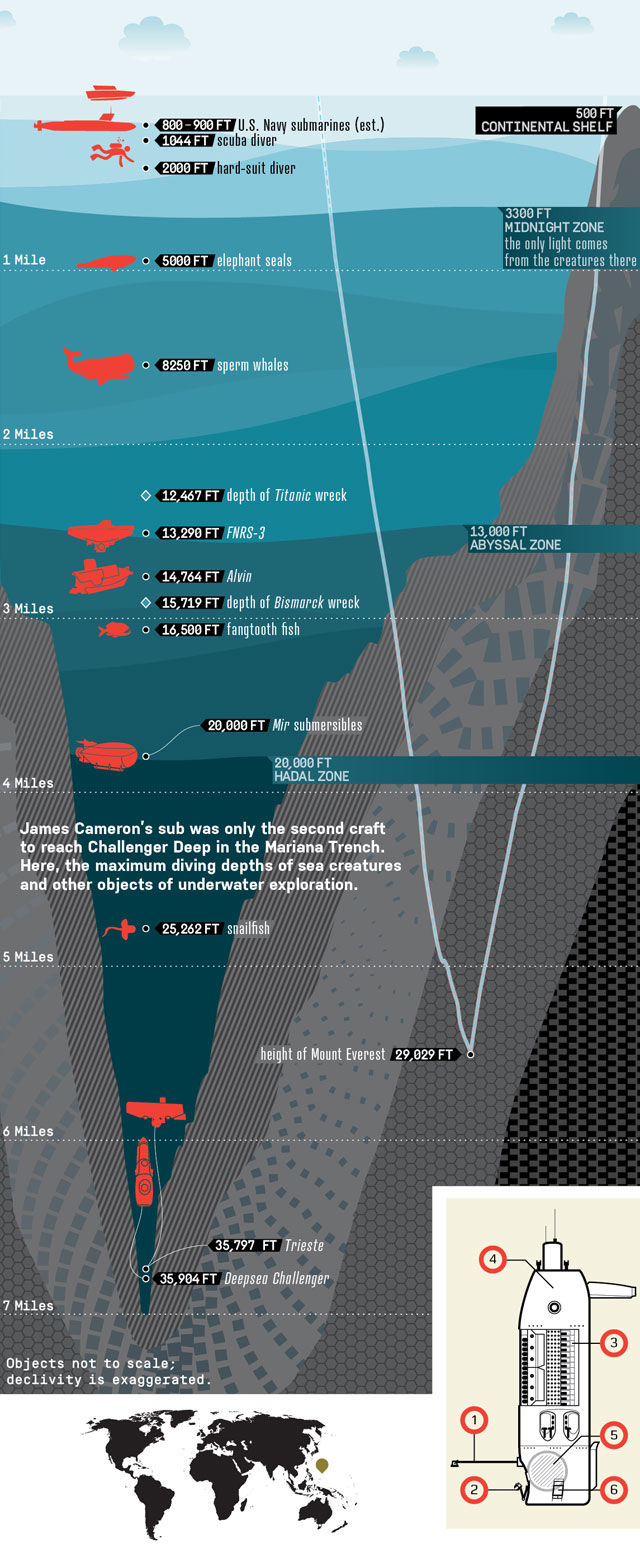
3) The Challenger Deep at the bottom of the Mariana's Trench (more than 37,000 feet deep, the deepest part of any ocean on Earth). The water temperature is just above freezing. There is no sunlight. The water pressure is an amazing 16,000 pounds per square inch:
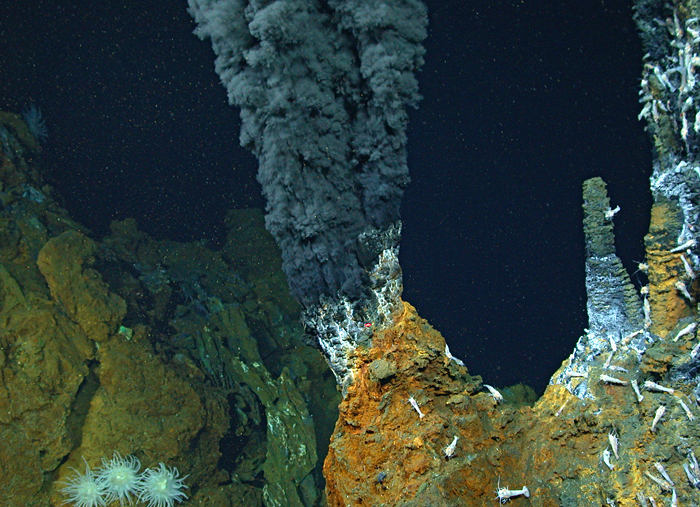
4) A "black smoker" off the coast of Washington State. The water churns and boils at more than 200 degrees fahrenheit and is laden with poisonous hydrogen sulfide gas. The ocean depth is approximately 2 kilometers (2000 meters). The water pressure is about 15 x the pressure we experience on the Earth's surface.
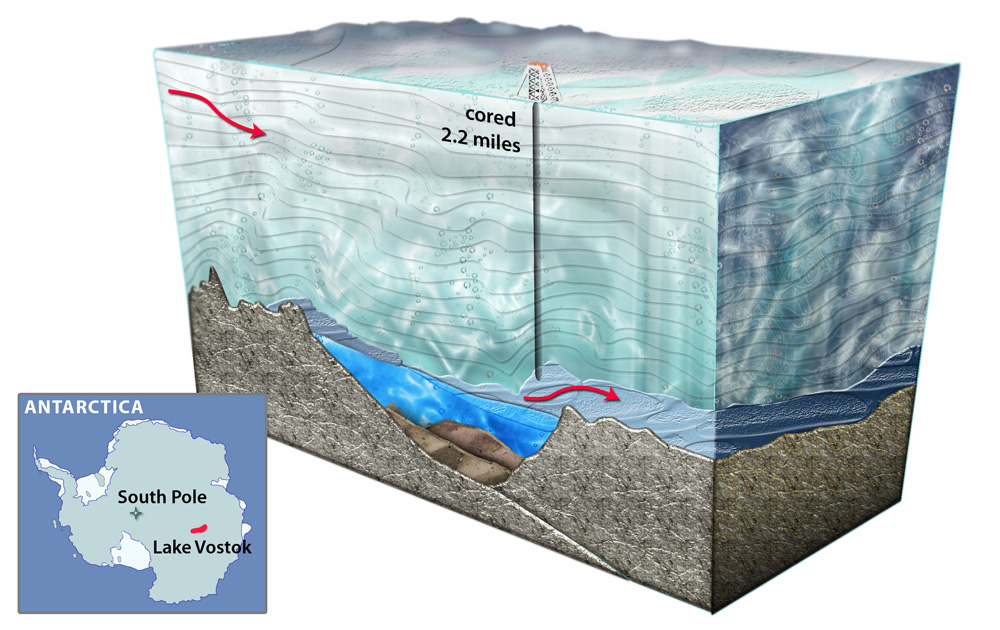
5) A massive lake of liquid water more than 10,000 feet below Vostok Station in Antarctica. Temperature 27 degrees Fahrenheit (the pressure of the ice above lowers the freezing point of the water below). Pressure is approximately 5000 pounds per square inch. There is no sunlight:
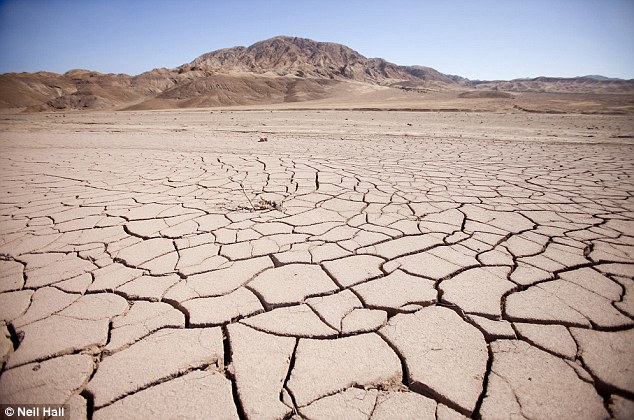
6) The Atacama desert in Chile is often cited as the driest non-polar place on Earth. Rain is frequently absent for years at a time. Daytime temperatures range from freezing to approximately 80 degrees fahrenheit:
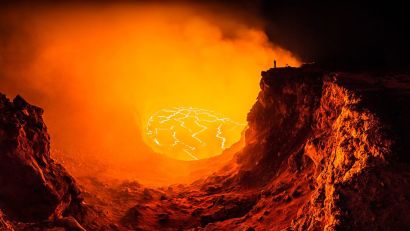
7) The Halemaumau fire pit in the Kilauea Crater on the Big Island of Hawaii. Strong concentrations of carbon dioxide, hydrogen sulfide and other poisonous gases. Temperatures reach 1200 degrees celsius (2100 degrees fahrenheit):
═══════════════════════════
Only one of those (seemingly) hostile environments is absent of life: Halemaumau. The temperature of the lava is just too hot to support any type of life.
However, every other environment DOES support some sort of life....let's go see.
═══════════════════════════
It looks like we need to revamp our understanding for the requirements of life.
Let's try again...
How about this?
- Source of Energy
- Appropriate Chemical Compounds (although we're not 100% on what those are)
- Water
- Not TOO Hot (and presumably not too cold, but we're not sure what TOO cold might be)
Here's an interesting (I HOPE) takeaway-- Every place on, in, and above the Earth that we've looked for life, we've found it!